You brush your teeth every day, so it can be frustrating when they still look darker or more yellow than you’d like. You may notice staining along the gum line, darker patches between your teeth or a general change in colour over time.
The important thing is that not every change in tooth colour is the same. Some marks are sitting on the surface and can be removed with professional cleaning. Other changes come from within the tooth and may need a different approach.
So if you’re wondering how to get rid of stained teeth, the first step is working out what you’re actually looking at.

Several everyday habits can gradually change the appearance of your teeth. The most common causes include drinks, tobacco, plaque and natural changes that happen as you get older.
Coffee and tea are common causes of surface staining. If you have several cups throughout the day, the colour can build up over time.
You don’t necessarily need to stop drinking them. Keeping up with brushing, cleaning between your teeth and regular professional hygiene appointments can help limit the build-up.
Tobacco can leave yellow or brown deposits on the teeth. These can be especially noticeable around areas where plaque collects.
Staining is only one reason to avoid smoking. Tobacco can also affect your wider oral health.
Coffee and tea aren’t the only things that can stain teeth. Drinks such as red wine and cola, along with strongly coloured foods, can contribute to surface discolouration when they’re consumed regularly.
Plaque is a sticky film that forms on your teeth. If it isn’t removed properly, it can harden into tartar. Unlike plaque, tartar can’t be brushed away at home.
Tartar can collect around the gum line and make teeth look darker or dirty. A professional clean can remove this build-up and some of the surface staining that comes with it.
Sometimes what looks like staining is actually a natural change in the tooth. As enamel becomes thinner with age, the more yellow dentine underneath can become easier to see.
In this situation, a clean can make the teeth feel fresher, but it won’t change their natural colour.
No. This is one of the most useful things to understand before choosing a treatment.
Surface stains sit on or close to the outside of the tooth. Coffee, tea, tobacco, plaque and tartar can all contribute to this type of discolouration. A professional hygiene appointment may remove much of it.
Other changes in colour are deeper within the tooth. These won’t necessarily improve with brushing or a scale and polish. If one tooth has changed colour or the reason for the change isn’t clear, it’s better to have it checked rather than simply trying a stronger whitening product.
That depends on what you’re trying to change. Here’s a quick comparison to help you understand the difference between the two treatments.
| Dental Hygiene Clean | Teeth Whitening |
|---|---|
| Removes plaque, tartar and surface staining from coffee, tea, tobacco and food | Lightens the natural colour of your teeth |
| Doesn’t change the natural shade of your teeth | Doesn’t remove tartar or deposits |
| Best for build-up around the gum line and between teeth | Best for teeth that are already clean but generally darker or more yellow |
| Works on natural teeth, fillings, crowns and other restorations | Only works on natural teeth, not fillings, crowns or veneers |
| A sensible first step if you have visible tartar or surface staining | Worth discussing once your teeth are clean but you still want a lighter shade |
If your teeth have visible tartar or surface staining, a professional hygiene appointment is a sensible place to start. You may find that removing the build-up is enough to make your smile look noticeably cleaner.
If your teeth are already clean but you want a lighter shade, teeth whitening may be worth discussing with your dentist.
And if you’re not sure why your teeth have changed colour, an assessment comes first. There’s no reason to assume whitening is the right answer before you know what you’re treating.
Brushing twice a day with fluoride toothpaste is essential for keeping your teeth and gums healthy. It also helps control plaque, which can contribute to staining.
But brushing harder won’t make your teeth whiter. Once plaque has hardened into tartar, you can’t brush it away. Scrubbing aggressively can also irritate your gums and may contribute to enamel wear.
If normal brushing isn’t shifting the marks, that’s a good point to ask a dental professional what is causing them.
A hygienist can remove plaque and tartar and polish the teeth, which can make a noticeable difference when the problem is surface staining. Pinner Green Dental also offers air polishing where appropriate to help remove certain surface deposits and staining.
The result can be particularly noticeable if staining has built up from coffee, tea or smoking.
There is an important difference though, cleaning removes deposits and surface stains, while whitening is used to lighten the colour of natural teeth.
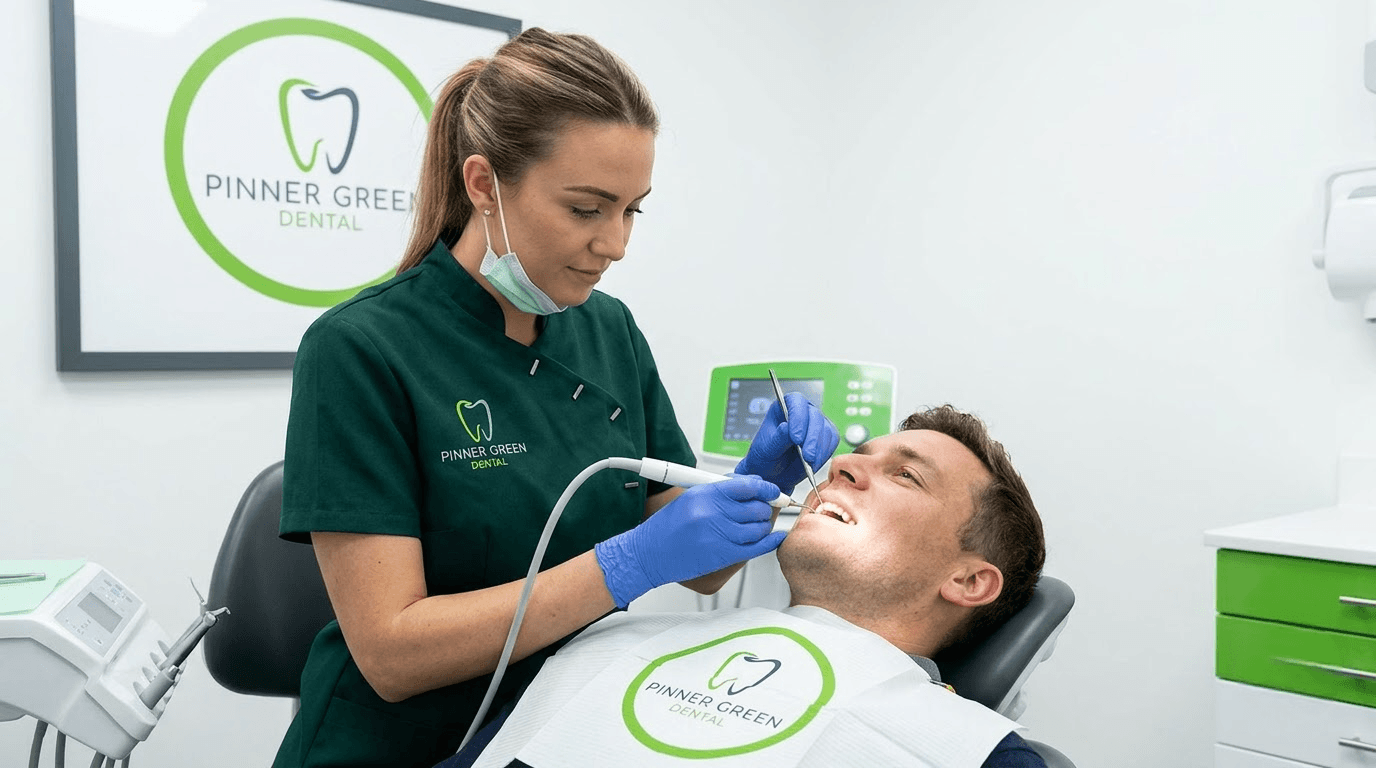
It can help with some types of discolouration, particularly when your natural teeth have become generally darker or more yellow over time. It isn’t designed to remove tartar or every type of stain.
Pinner Green Dental offers professional teeth whitening and can assess whether it is suitable for you.
It’s also important to remember that whitening works on natural teeth. Fillings, crowns, veneers and other restorations don’t whiten in the same way. If you have visible dental work, your dentist can discuss this with you before treatment.
If professional cleaning doesn’t remove the discolouration, don’t assume you need a stronger whitening product. The next step may simply be to find out why the tooth looks different.
It’s particularly worth arranging a dental assessment if:
A colour change isn’t always a cosmetic problem, so an unusual change is better checked than ignored.
You can’t always prevent staining completely, especially if you drink tea or coffee regularly. You can, however, reduce the amount that builds up.
Brush twice a day with fluoride toothpaste and clean between your teeth regularly. This helps keep plaque under control.
Regular hygiene appointments can remove tartar and surface staining that you can’t remove with a toothbrush. Your hygienist can also point out areas that may need more attention at home.
If you drink coffee, tea or other drinks that can stain teeth, having water afterwards can help rinse your mouth. The bigger picture is how often you’re having them throughout the day.
Stopping smoking can reduce tobacco staining as well as supporting better oral health.
If a stain doesn’t come away with normal brushing, pressing harder isn’t the solution. Find out what is causing the discolouration instead.
Stained teeth can have a simple cause, but the best way to improve them depends on whether you’re dealing with surface staining, tartar or a deeper change in colour.
At Pinner Green Dental, the team can assess your teeth and explain whether professional hygiene, whitening or another option is more appropriate.
If you’re concerned about stained teeth in Pinner, book an appointment to discuss what you’re seeing and what can be done.
The only reliable way to know what’s causing your stained teeth, and which treatment is right for you, is a proper assessment. Our dental hygiene page and teeth whitening page cover the treatment process in more detail.
If you’ve been putting off asking about it because you’re not sure which option is right for you, that’s exactly the kind of question worth bringing to a consultation rather than guessing yourself. You can get in touch to arrange one, or call the practice directly on 020 8866 0362.