Not every smile concern requires a lengthy or complex procedure. For patients who want to improve the appearance of chipped, discoloured, gapped, or uneven teeth, composite bonding offers a straightforward and effective way to achieve noticeable results without the need for major dental work.
At Pinner Green Dental, composite bonding is one of the more popular cosmetic treatments available. Patients are often drawn to it because of the minimal preparation involved, the natural-looking results, and the fact that it can usually be completed in a single visit.
Understanding what the treatment involves, what it can address, and what to expect in terms of results can help patients decide whether it is the right option for them.
Composite bonding is a cosmetic dental procedure in which a tooth-coloured resin material is applied directly to the surface of a tooth and shaped by hand to improve its appearance. The resin is then hardened using a special curing light and polished to blend naturally with the surrounding teeth.
Unlike veneers or crowns, composite bonding does not require removal of significant amounts of natural tooth structure. The treatment is considered minimally invasive, which is one of the reasons many patients find it an appealing starting point for cosmetic improvement.
The composite resin comes in a range of shades, allowing the dentist to match the material closely to the natural colour of your teeth.
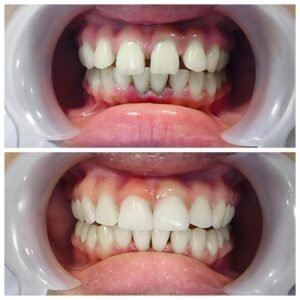
Composite bonding is a versatile treatment that can address a range of cosmetic concerns, including:
It is worth noting that composite bonding works best for mild to moderate cosmetic concerns. Patients with more extensive structural issues may be better suited to other treatments, which the dentist can discuss during a consultation.
One of the practical advantages of composite bonding is that it can often be completed within a single appointment, depending on the number of teeth being treated.
The process begins with the dentist lightly roughening the tooth surface to help the resin bond securely. A conditioning liquid is applied before the composite material is added and carefully shaped to achieve the desired result. Once the dentist is satisfied with the shape, the resin is hardened using a curing light and then polished to a smooth, natural-looking finish.
In most cases, anaesthesia is not required unless the bonding is being used to treat a decayed tooth. The treatment is generally comfortable and well tolerated.
With proper care, composite bonding can last several years before any touch-up or replacement is needed. The longevity of the treatment depends on a number of factors, including oral hygiene habits, diet, and whether the patient grinds their teeth.
To help maintain composite bonding in good condition, patients are generally advised to:
If the bonding does chip or stain over time, it can often be repaired or refreshed without replacing the entire treatment.
Patients considering cosmetic treatment sometimes ask how composite bonding differs from porcelain veneers. Both options can improve the appearance of teeth, but they involve different processes and suit different circumstances.
Composite bonding is applied directly to the tooth without the need for a laboratory, which makes it faster and generally more affordable. Veneers are thin porcelain shells made to order and bonded to the front of the tooth, offering a result that tends to be more resistant to staining over time.
Composite bonding is often considered a good option for patients who want to see an improvement without committing to a more involved procedure, or for those addressing one or two specific concerns rather than a full smile makeover.
A dentist can advise which option is more appropriate based on the condition of the teeth and the result the patient is hoping to achieve.
Composite bonding is suitable for most adults in good general oral health. Before recommending the treatment, a dentist will assess the condition of your teeth and gums to ensure there are no underlying issues that need to be addressed first, such as decay or gum disease.
The treatment may not be suitable for patients with significant misalignment or bite problems, as these may need to be treated separately before cosmetic work is carried out.
For patients who are good candidates, composite bonding can deliver a meaningful improvement to the appearance of the smile in a single visit, with minimal disruption to the natural tooth structure.
At Pinner Green Dental, patients can receive a thorough assessment and personalised advice on whether composite bonding is the right treatment for their smile goals. The practice offers a range of cosmetic options and takes time to discuss each one clearly so patients can make a confident and informed decision.
If you are considering composite bonding in Pinner, or would simply like to find out more about improving the appearance of your teeth, why not book a consultation with our team at Pinner Green Dental.
< Back to Blog